2026-08-14 · Robert Ellis
Water Damage Restoration vs Water Removal: Understanding the Difference
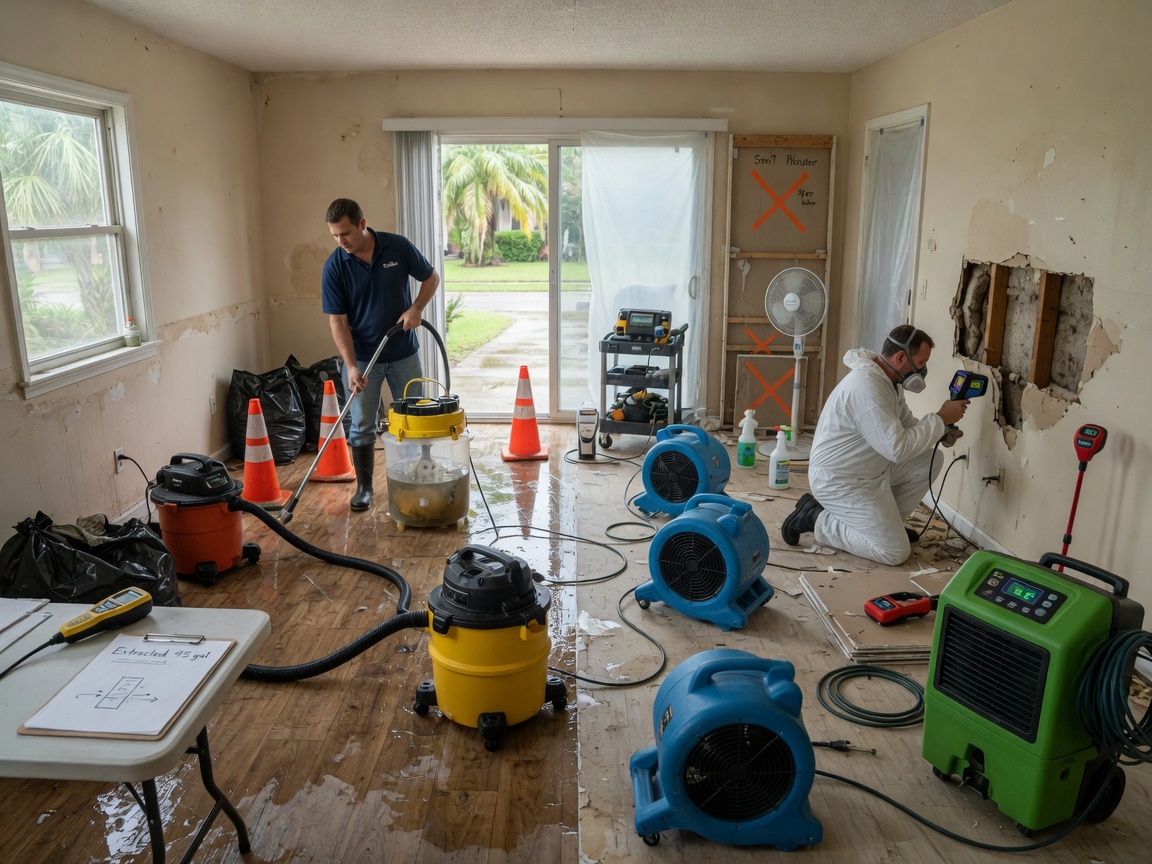
Water removal extracts standing water within the first 24 to 48 hours, while water damage restoration covers the full sequence of drying, sanitizing, and structural repairs that often spans 3 to 14 days depending on saturation levels and materials affected.
What Water Removal Entails
Water removal targets visible, pooled water using pumps and extraction equipment to lower moisture levels quickly. In Pensacola's humid subtropical climate with hot summers and mild winters, standing water from appliance leaks or heavy rain can spread fast through slab foundations common in neighborhoods like East Hill and North Hill. Technicians typically deploy truck-mounted units that pull 50 to 100 gallons per minute until no free water remains. This step stops immediate migration into walls and floors but leaves behind damp materials that require further attention. Without prompt extraction, microbial growth begins within 24 to 48 hours in the local humidity.
The Full Process of Water Damage Restoration
Water damage restoration begins after extraction and includes moisture mapping, structural drying, antimicrobial treatment, and reconstruction. Equipment such as air movers and dehumidifiers runs for 3 to 7 days on average to bring wood and drywall below 15 percent moisture content. In areas like Cordova Park or Scenic Heights, older homes may need specialized drying for plaster and hardwood that retain water longer. The process also addresses hidden pockets behind baseboards and under cabinets that simple pumping misses. Water Damage Restoration addresses these phases systematically to restore pre-loss conditions.
Key Differences in Equipment and Timeline
Water removal relies on pumps and wet vacuums for rapid liquid extraction, often completed in one day. Restoration adds industrial drying systems, HEPA air scrubbers, and moisture meters that operate over multiple days. Pensacola properties near Naval Air Station Pensacola or the University of West Florida frequently see secondary damage from trapped humidity if drying is skipped. Restoration crews document every reading and may remove sections of drywall or flooring when readings stay above safe thresholds. The two services overlap in the first hours but diverge sharply once free water is gone.
When Each Service Applies After Local Events
Use water removal alone for fresh, clean water spills that have not reached porous materials. Choose full restoration after roof leaks, burst pipes, or storm flooding common during Pensacola summers. Emergency Water Extraction pairs with restoration when water has already wicked into insulation or subfloors. Homeowners in Downtown Pensacola or West Pensacola often need both steps after heavy rain events because high groundwater tables prolong drying. Skipping restoration leaves conditions that promote mold in the region's consistent humidity.
Practical Next Steps for Pensacola Property Owners
Document the source and extent of water before any work begins. Contact a local team that can reach the site within hours and provide written moisture readings at each visit. What to Do Immediately After Water Damage: A Step-by-Step Guide outlines safe shutoff procedures and temporary containment. How Professional Water Damage Restoration Works From Start to Finish details the equipment sequence used on typical Escambia County jobs. Pensacola Restore Group operates from 510 Corday St, Pensacola, FL 32503 with hours Mon–Fri 8am–6pm and Sat 9am–2pm.