2026-07-05 · Robert Ellis
Common Causes of Water Damage in Homes and How to Prevent Them
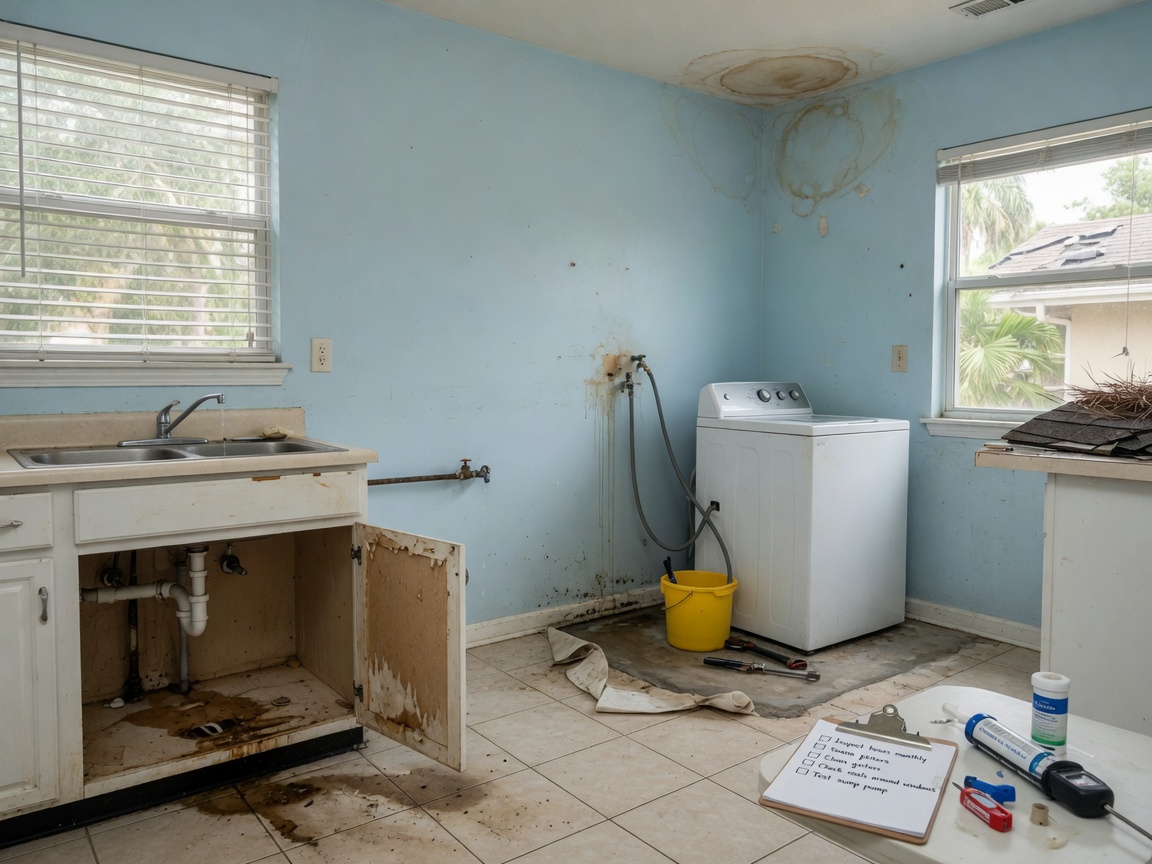
Plumbing failures, appliance leaks, roof penetrations, and storm-driven rain rank as the leading causes of water damage in Pensacola homes. Addressing these through scheduled checks and prompt repairs prevents most incidents before water reaches floors or walls.
Plumbing System Failures
Aging supply lines and drain pipes cause the majority of indoor water damage calls in neighborhoods such as East Hill and North Hill. Galvanized steel lines installed before 1970 often corrode from the inside, developing pinhole leaks that release 1–3 gallons per minute once they breach. In the humid subtropical climate, constant moisture accelerates corrosion on fittings near water heaters and under sinks. Homeowners can reduce risk by replacing visible supply lines every 8–12 years and installing shut-off valves on each fixture. Annual visual inspections of crawl spaces and under-sink areas catch slow drips before they saturate subfloors. When a sudden burst occurs, isolating the water at the main valve and calling for professional assessment limits secondary damage to drywall and insulation.
Appliance and Fixture Leaks
Washing machines, dishwashers, refrigerators with ice makers, and water heaters account for roughly 25 percent of residential claims in West Pensacola and Cordova Park. Supply hoses on washers typically last 5–7 years before rubber degrades and splits under pressure. Water heater tanks in 40- to 50-gallon sizes begin leaking at the bottom seam after 10–12 years of service in our mineral-rich water. Prevention starts with replacing rubber hoses with braided stainless steel versions and placing drip pans with automatic shut-off sensors beneath units. Checking the temperature-pressure relief valve on water heaters twice a year and flushing sediment annually keeps internal corrosion in check. Monitoring utility bills for unexplained spikes also flags hidden leaks early.
Roof Leaks and Attic Moisture
Pensacola’s hot summers and frequent afternoon thunderstorms drive roof leaks that often go unnoticed until ceiling stains appear. Missing shingles, deteriorated flashing around chimneys, and clogged gutters allow water to enter during heavy rain events. In Scenic Heights and Downtown Pensacola, older homes with slate or tile roofs require professional inspections every two years to spot lifted tiles or cracked seals. Keeping gutters clear of oak leaves and installing gutter guards reduces overflow that soaks fascia boards. Attic ventilation must move at least 1 square foot of vent area per 150 square feet of attic floor to prevent condensation on rafters during mild winters. These steps stop moisture from reaching insulation and ceiling joists.
Storm and Heavy Rain Impacts
Escambia County receives an average of 65 inches of rain yearly, with tropical systems delivering 6–10 inches in 24 hours. Wind-driven rain forces water under flashing and around window frames in homes near Pensacola Beach and Naval Air Station Pensacola. Sump pumps in low-lying crawl spaces should be tested monthly and paired with battery backups. Sealing exterior foundation cracks wider than 1/8 inch with hydraulic cement blocks groundwater entry during prolonged wet periods. After major storms, checking attics and exterior walls within 48 hours catches intrusion before mold colonies form.
Practical Year-Round Prevention Steps
Create a quarterly maintenance calendar that includes checking all visible pipes, testing GFCI outlets near water sources, and clearing debris from roof valleys. Keep a written log of appliance ages and scheduled replacements. In the Pensacola climate, running dehumidifiers set to 50 percent in basements and crawl spaces during summer months removes excess moisture that would otherwise condense on cool surfaces. These habits, combined with professional moisture detection when any sign of dampness appears, keep most homes dry without major restoration work.